How Your Skin Changes As You Age
Your skin at 20, 30, 40, 50, 60, and beyond
Aging is a natural process, and there is nothing wrong with getting older, we all do it. But understanding what is happening beneath the surface of your skin can help you make better choices about how you care for it.
When we are young, our skin has a remarkable ability to renew and repair itself. It produces collagen and elastin more efficiently, holds moisture better, and recovers more quickly from everyday damage.
As we get older, all of these processes gradually begin to slow down.
First, let's start with telling you the truth. What to expect as the skin ages.
IN YOUR 20'S – PREVENTION STARTS NOW
Your skin is typically at its strongest during your 20's, when collagen and elastin are plentiful, skin renewal is efficient, and moisture retention is at its best.
You may not see signs of aging yet, but what you do now matters.
Sun exposure, tanning, smoking, poor skincare habits, repeatedly damaging your skin barrier, and other lifestyle and environmental factors can contribute to changes that may not become visible until years later.
This is why I say, "You are never too young to start taking care of your skin."
Your goal in your 20's isn't to treat aging skin. It's to protect the beautiful skin you already have.
Sun protection, a healthy skin barrier, gentle exfoliation, hydration, and a good daily skincare routine are your skin's best friends.
IN YOUR 30'S – THE FIRST CHANGES
This is when many people begin noticing those first little changes.
Fine lines may start appearing around the eyes or forehead. Your skin may not look quite as plump as it once did. You may notice uneven pigmentation from earlier sun exposure, and your skin may take longer to recover when it becomes dry or irritated.
Collagen production is gradually slowing, and your skin's natural renewal processes aren't quite as efficient as they once were.
This doesn't mean you suddenly have "old skin." It means your skin's needs are beginning to change.
This is the time to continue prevention while beginning to give your skin more support. I've told clients, "This is your skin's wake-up call."
IN YOUR 40'S – HORMONES BEGIN TO MATTER
For many women, the 40's bring much more noticeable changes.
Perimenopause can begin during these years and changing hormone levels can affect your skin. You may notice increased dryness, changes in texture, loss of firmness, more visible lines, or skin that suddenly seems more sensitive than it used to be.
Collagen and elastin, the structures that help give our skin its firmness and resilience, are changing as well.
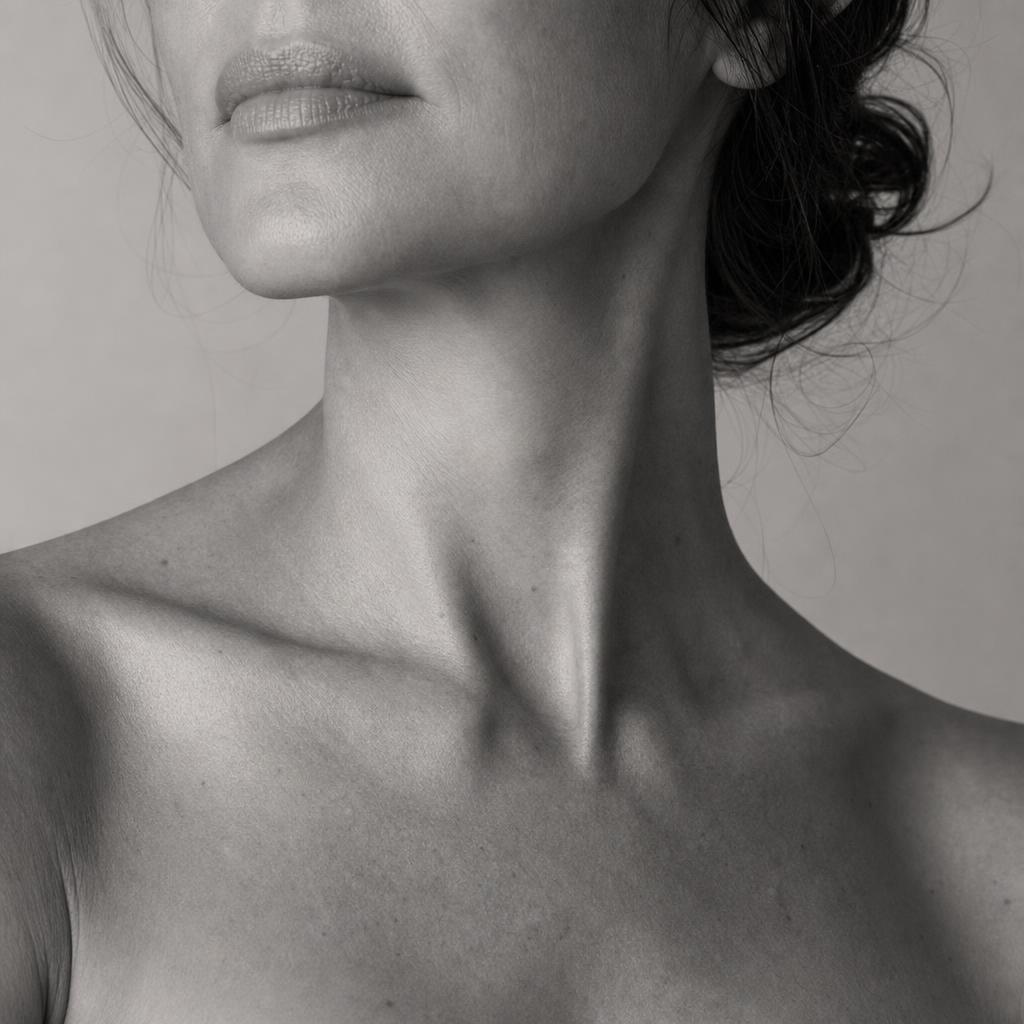
You may also begin noticing changes around the jawline, neck, chest, and arms, not just your face.
This is something I want women to understand.
Skin aging doesn't stop at your chin.
Your neck, décolleté, hands, arms, and body have been aging right along with your face.
IN YOUR 50'S – THE CHANGES BECOME MORE NOTICEABLE
The years surrounding menopause can bring some of the most noticeable changes in a woman's skin.
As estrogen declines, skin can become thinner and drier. Collagen loss accelerates, elasticity decreases, and the skin may not retain moisture as effectively.
At the same time, changes are happening underneath the skin.
The fat pads that once helped give the face its youthful fullness begin to change and lose volume. Combined with changes in collagen, elastin, bone, and other supporting structures, this can contribute to deeper folds, hollowing, jowling, and sagging.
This is why simply adding more moisturizer isn't always enough.
We are no longer dealing with just dry skin. We're dealing with changes in the structure and function of aging skin.
IN YOUR 60'S AND BEYOND – YOUR SKIN NEEDS MORE SUPPORT, NOT MORE ABUSE
As we continue to age, the skin generally becomes thinner, drier, and more fragile. Natural oil production decreases, cell renewal slows, and the skin may take longer to recover from irritation or injury.
Years of accumulated sun exposure may become more apparent as uneven pigmentation, spots, rough texture, fine lines, and wrinkles appear.
This is exactly when I see women make a big mistake.
More acids. More exfoliation. Stronger peels. More aggressive treatments.
Older skin doesn't necessarily need more aggression. It needs smarter care.
Protect the barrier. Hydrate the skin. Support it with products you have researched. Become informed, know what you are applying to your skin. Exfoliate appropriately rather than excessively. Protect it from further UV damage.
And remember that your skincare routine may need to change as your skin changes.
AGING IS MORE THAN WRINKLES
When we talk about aging skin, most people immediately think about wrinkles.
But aging involves much more than that.
Over time, we can experience changes in:
- Collagen and elastin
- Skin thickness
- Moisture retention
- Natural oil production
- Cell renewal
- Pigmentation
- Blood flow
- Facial fat and volume
- Bone and underlying structural support
- The skin's ability to recover from damage
That is why there is no single product, serum, procedure, or miracle ingredient that can address every aspect of aging. It is also why I keep stressing the importance of protecting your skin barrier. A strong skin barrier is your best defense when it comes to anti-aging.
That's why I created Age-Defy Professional. PDRN along with meaningful ingredients to help prevent anti-aging and to assist correcting the mistakes we made in our youth. PDRN Intensive Repair Creme is formulated especially for skin that has lived, your skin and my skin. Together with PDRN Intensive Serum, you have an unbeatable team of ingredients that work together, at levels proven to give results.
You may not look 25 again, but you may just have the best skin you have had in years.
BUT WHAT IF THE DAMAGE IS ALREADY THERE?
Maybe you're reading this at age 55, 65, 75, 80, and thinking:
"Well, I wish someone had told me all of this when I was 25."
That's OK. Start now.
You cannot turn your skin back into the skin you had at 25 — and any company promising that isn't being realistic with you. I will always tell you the truth.
But, you can take better care of the skin you have today.
You can improve hydration. You can support and reclaim a healthy skin barrier. You can improve the appearance of texture, tone, fine lines, and other visible signs of aging. And most importantly, you can protect your skin from unnecessary additional damage.
Prevention is always easier than correction.
But, it's never too late to start taking care of your skin.
Next, let's talk about what we can do when prevention is no longer enough. That section is titled, "But What If the Damage is Already Done?" You can find it in our Education Section.
If you want to learn more about ingredients, check out our "Let's Talk Ingredients." You will find it in our Education Section.